“grow more than” search results (8000)

Details of coffee producing areas: the history of coffee development in Indonesia
Indonesia's coffee business originated in 1696 and took place during the Dutch colonization of Indonesia from a spice farm in Batavia to a coffee producing area, making Java and Sumatra the third largest coffee exporter in the world today. From traditional coffee to special espresso coffee has been recognized by Indonesia as a cash crop for more than 300 years.
2015-12-03 Coffee producing area details introduction Indonesia Development History
An introduction to Hawaiian Coffee the history of Hawaiian coffee Hawaiian coffee tastes like Hawaii
Hawaii, which spans latitudes 19 to 22 degrees, south of the Tropic of Cancer and blown by trade winds, is a perfect coffee-growing area. The 50th state of the United States, 2400 miles from the west coast of the United States, is the only state in the United States that produces coffee. Kona kona in Hawaii is also internationally renowned as one of the best coffee in the world. In the volcanic soil
2016-03-24 Hawaii coffee introduction development history taste span 22 degrees latitude
A coffee-producing country in Jamaica with fertile new volcanic soil conducive to growing coffee
Most of the Blue Mountains are more than 1800 meters above sea level, of which the highest peak is 2256 meters above sea level. It is also the highest peak in the Caribbean and is a famous tourist attraction. The unique flavor of Blue Mountain Coffee is related to its unique geographical location and climatic conditions. Blue Mountain is located in the coffee belt between 25 degrees north latitude and 25 degrees south latitude, with fertile new volcanic soil, fresh air, no pollution, all the year round.
2016-06-18 Have benefit grow coffee fertile new volcano volcano soil Jamaica produce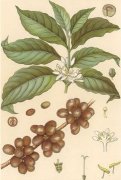
Coffee species Coffee trees can be roughly divided into five types
Coffee is called coffea in the biological genus. This genus is a member of the Rubiaceae family. It has more than 500 species and more than 6000 varieties, most of which are tropical trees and shrubs. From the point of view of drinkers, coffee trees can be roughly divided into five species, of which Arabica and Robusta are more common. Arabica species account for more than 70% of the world's total output.
2015-03-19 Coffee kind roughly is divided into 5 kinds coffee biology genus named cof.
Coffee beans suitable for blending blended coffee-Costa Rica C
Costa Rica Coffee: Costa Rica Coffee is produced in the Republic of Costa Rica (The Republic of Coffee) in southern Central America. Its coffee quality is similar to that of Colombia coffee, which is suitable for blending mixed coffee. Costa Rica is bordered by the Pacific Ocean to the west and the Caribbean Sea to the east. Costa Rica means "rich coast" in Spanish.
2016-02-25 One kind suitable for blending blend coffee coffee beans Costa Rica Co
Introduction to the growing environment of Ethiopian coffee introduction to Yega Snow Coffee Manor
Ethiopian coffee beans grow in close to the natural environment, after years of planting under the same growth conditions, Ethiopian coffee beans have gradually adapted to the environment here. More than 60% of coffee beans are grown in forests or semi-forests. Large-scale coffee-growing villages account for about 35% of the country's total coffee production. Many of these are used.
2016-07-05 Ethiopia Coffee growth Environment introduction Yega Snow Coffee Manor
Growing environment in the Andes, a coffee-growing region in Colombia
The suitable climate in Colombia provides a real natural pasture for coffee. Coffee trees in Colombia are mainly cultivated in the Andes, on steep slopes about 1300 meters above sea level, where the annual temperature is about 18 degrees Celsius, annual rainfall is 2000 to 3000 millimeters, latitude 1-11 15 north, longitude 72-78 west, and the specific range of elevation can exceed 2.000 meters. By
2016-06-17 Colombia coffee producing areas Andes mountains cultivation environment suitable
Introduction of Ugandan coffee bean flavor manor with unique papaya flavor
The coffee growing industry in Uganda is one of the pillar industries of its exports. Uganda is the birthplace of Robsta in Africa, just as Ethiopia is the origin of Arabica coffee, while Robster coffee was first discovered in Uganda. So far, Uganda has a history of growing coffee for more than 100 years. The output ranks second in Africa, after Ethiopia. At the same time, Uganda is also a minority in Africa.
2016-06-29 With unique papaya Uganda coffee beans flavor manor producing area introduction Wu
Characteristics of Costa Rican coffee the culture of Costa Rican coffee
Costa Rican coffee is called extra hard beans, and this kind of coffee can grow at an altitude of more than 1500 meters. Altitude has always been a problem for coffee growers. The higher the altitude, the better the coffee beans, not only because the higher altitude can increase the acidity of the coffee beans and thus increase the flavor, but also because the night temperature at the higher altitude is lower, which makes the trees grow slowly, thus making the coffee.
2016-05-06 Costa Rica coffee characteristics culture known as very hard
Basic knowledge of coffee growing
What is coffee? Coffee is the fruit of a Rubiaceae plant grown at altitudes of about 6,000 feet and distributed along narrow subtropical axes around the world; the coffee tree is green all year round and can grow up to 20 feet tall, usually controlled to 8 to 10 feet tall for easy harvesting.
2014-06-17 Coffee knowledge coffee growing coffee encyclopedia
Features of Fine Costa Rican Coffee Fine Costa Rican Coffee Beans
Coffee is an important source of income for Costa Rica, introduced in 1808 and cultivated for 200 years. Costa Rica, where a third of the population is involved in coffee, Costa Ricans say coffee has transformed the country, making it an affluent environment, and coffee has contributed significantly, even though Costa Rica ranks last in terms of land mass in Central America.
2016-05-03 fine Costa Rica coffee characteristics coffee beans important
Introduction of Costa Rican coffee beans characteristics of Costa Rican coffee beans
Costa Rican coffee is called extra hard beans, and this kind of coffee can grow at an altitude of more than 1500 meters. Altitude has always been a problem for coffee growers. The higher the altitude, the better the coffee beans, not only because the higher altitude can increase the acidity of the coffee beans and thus increase the flavor, but also because the night temperature at the higher altitude is lower, which makes the trees grow slowly, thus making the coffee.
2016-05-05 Costa Rica coffee beans introduction boutique coffee characteristics
Hawaiian Coffee Kona Coffee Introduction Hawaiian Fine Coffee Bean Region Flavor Taste
Although coffee trees are grown commercially on all Hawaiian islands, the Big Island currently has the largest number of coffee plantations, with about 650 plantations, but these coffee plantations are relatively small, totaling less than 2000 acres of plantation land, and only 25 coffee plantations are operating on Maui, Molokai, Oahu and Kauai.
2016-07-29 Hawaiian Coffee Kona Introduction Boutique Coffee Bean Region Flavor Taste Although
Coffee knowledge the growth habits of Coffee
Coffee is a kind of drink that gives the public the impression that it is black, bitter, sleepless and excited. The coffee beans we see in the coffee shop are tea-brown, which belongs to roasted coffee beans, while the color of the coffee liquid is amber. Coffee comes from coffee beans, which are harvested and processed from the fruit of trees.] Distribution of coffee: coffee
2015-08-19 Coffee knowledge growth habits coffee a kind of drink the public like black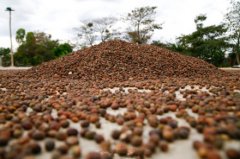
The coffee growing belt lies in the tropics between the Tropic of Cancer and the Tropic of Cancer.
Most of the coffee producing areas in the world are located in the tropics between the Tropic of Cancer and the Tropic of Cancer, which we call the coffee belt and Coffee Belt or Coffee Zone in English. As a tropical cash crop, coffee trees grow in coffee belts with excellent climatic conditions, where the sun shines all the year round, is rich in calories and Rain Water, and the annual average temperature is above 20 ℃. But the high temperature
2015-01-19 Coffee planting located Tropic of Cancer occasional tropical regional global most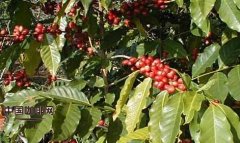
Introduction to the types of coffee beans tell me about the types of coffee
Coffee is called coffea in the biological genus. This genus is a member of the Rubiaceae family. It has more than 500 species and more than 6000 varieties, most of which are tropical trees and shrubs. From the point of view of drinkers, coffee trees can be roughly divided into five species, of which Arabica and Robusta are more common. Arabica species account for more than 70% of the world's total output.
2015-02-02 Coffee beans species introduction talk about coffee biology genus named co
The environment of growing coffee beans the growing conditions of fine coffee in Colombia
The suitable climate in Colombia provides a real natural pasture for coffee. Coffee trees in Colombia are mainly cultivated in the Andes, on steep slopes about 1300 meters above sea level, where the annual temperature is about 18 degrees Celsius, annual rainfall is 2000 to 3000 millimeters, latitude 1-11 15 north, longitude 72-78 west, and the specific range of elevation can exceed 2.000 meters. By
2016-04-28 Planting coffee beans environment Colombia coffee boutique conditions suitable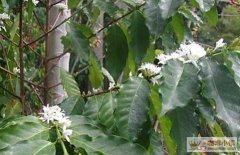
Coffee species Coffee Tree species basic knowledge of Fine Coffee
Coffee is called coffea in the biological genus. The genus is a member of the Rubiaceae family. It has more than 500 species and more than 6000 species, most of which are tropical trees and shrubs. From the point of view of drinkers, coffee trees can be roughly divided into five types, of which Arabica and Robusta are more common. Arabica species account for 70% of the world's total output.
2015-01-22 Coffee species tree species boutique basics common sense coffee biology genus named
Introduction of Ugandan coffee beans with mild climate and suitable for growing coffee
Uganda leads Africa in coffee production, accounting for more than 70% of its total exports. In the 1960s, Ugandan coffee production remained at 3.5 million bags a year. By the mid-1980s, coffee production had dropped to 2.5 million bags a year, mainly for political reasons. But now coffee production is on the rise again, currently about 3 million bags a year. Mainly exported to the European Union, including Germany and Italy
2016-06-28 Climate mild suitable planting coffee Uganda coffee beans introduction
What environmental conditions do you need to grow coffee? Nanyang flavor white coffee quality
However, not all the areas with the above conditions can become coffee producing areas, and suitable soil conditions are needed to cultivate high-quality coffee. Loose, fertile, deep soil and well-drained soil are important conditions for growing coffee. In addition, the soil properties should be sour, and the PH value is between 5.5 and 6.5. I still remember a long time ago there was an advertisement for Colombian coffee, in which
2016-06-06 Planting coffee need what environment conditions Nanyang flavor white coffee qu